10 Treadmill Workouts for Weight Loss
Try 10 treadmill workouts for weight loss, from incline walking to HIIT and tempo runs, with sample sessions, safety guidance, and progression tips.

The hardest treadmill workout isn't automatically the best workout for weight loss. Sprinting can be useful, but it also creates more recovery demands than a brisk walk, and a session you repeat consistently will usually contribute more than an exhausting workout you avoid for the rest of the week. The most effective plan matches the session to your fitness level, available time, recovery capacity, and willingness to keep showing up.
This list organizes treadmill workouts for weight loss by training demand and purpose. You'll find low-impact calorie accumulation, steady aerobic work, flexible speed play, structured intervals, tempo sessions, and advanced incline variations. Every session should begin with an appropriate warm-up, progress at a manageable pace, and fit alongside strength training and nutrition rather than trying to replace them.
The historical 3,500-calorie rule explains why repeated weekly activity matters more than one dramatic workout. A 155-pound person burns about 133 calories during 30 minutes of walking at 3.5 mph, while a 185-pound person burns about 159 calories in the same session, according to treadmill walking guidance on weekly calorie expenditure. Empire Athletics can support that consistency with flexible 24/7 access, varied cardio equipment, and certified one-on-one programming at its Central Massachusetts locations.
1. High-Intensity Interval Training HIIT
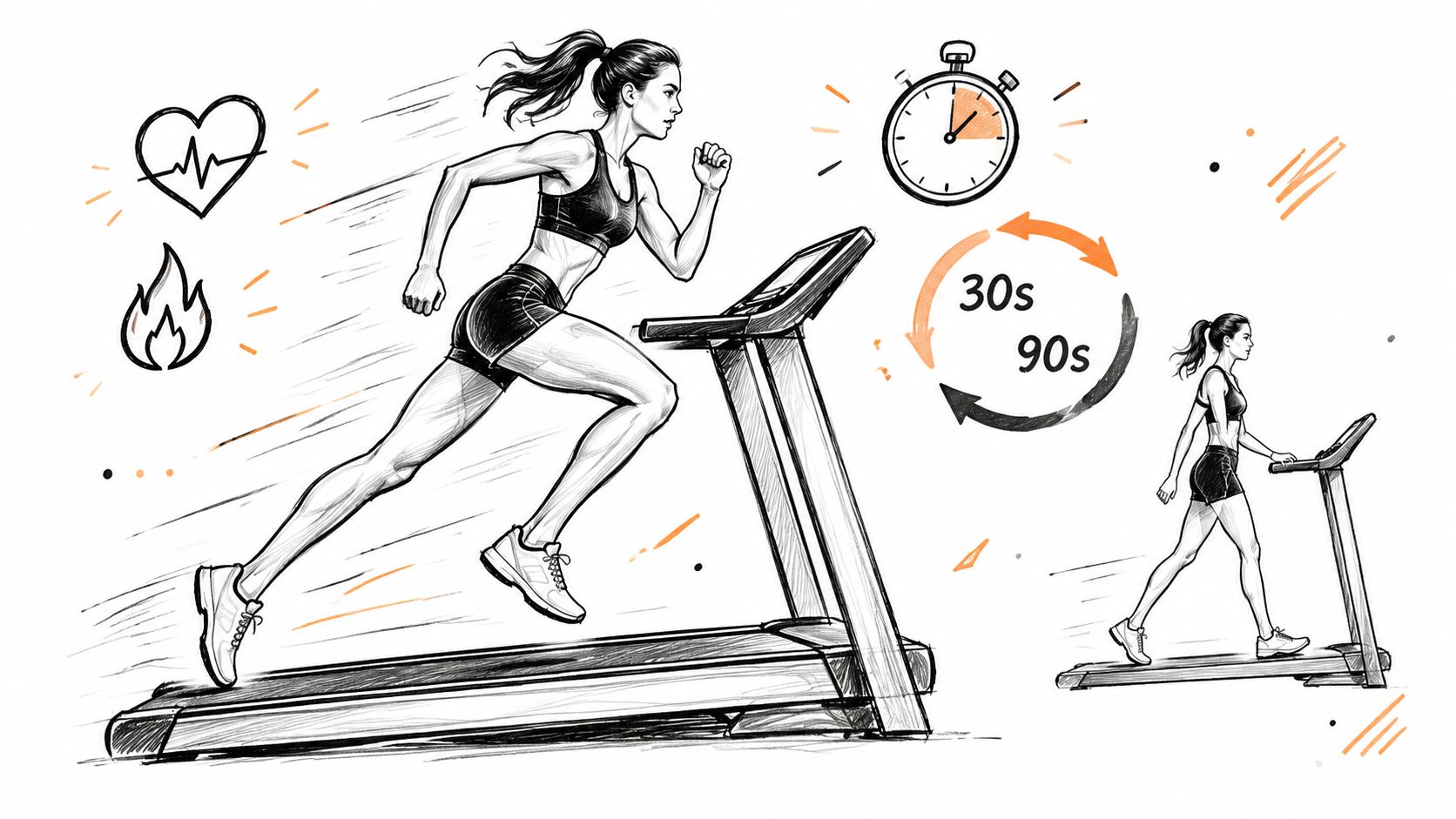
HIIT alternates demanding work periods with easier recovery. On a treadmill, that might mean a short fast run followed by walking, but the hard interval should be challenging without forcing you to lose control of your stride. It's a time-efficient option for people who already tolerate regular walking or running and want a clear intensity change.
Start with five minutes of easy walking or jogging. Then complete six to eight rounds of 30 seconds at a hard effort followed by 90 seconds of easy walking, finishing with several minutes of gradual cool-down. The hard segments should feel powerful, not reckless. If you can't maintain a stable foot strike or upright posture, reduce the speed.
HIIT can produce a strong training stimulus, but it isn't a daily calorie-burning shortcut. A randomized trial in adults with obesity found HIIT was non-inferior to moderate-intensity continuous training for weight loss, with similar side effects and dropout, as reported in the JAMA Network Open review and related evidence. That makes preference and sustainability important when choosing between hard intervals and longer moderate sessions.
Practical rule: Increase the intensity of the fast intervals before extending them. Keep HIIT on non-consecutive days and use walking or easy cardio between sessions.
Use this workout when time is limited and your recovery is reliable. Beginners should first build a base with steady walking or incline walking. For broader body-composition guidance, see how to reduce body fat percentage.
2. Steady-State Cardio at Moderate Intensity
Steady-state cardio earns its place through repeatability, not drama. Choose a pace you can sustain, complete the session without exhausting yourself, and leave enough energy to train again. That makes it practical for beginners, shift workers, and anyone fitting exercise around a busy week.
Set the treadmill so you can speak in complete sentences, then walk or jog continuously for 30 to 60 minutes. If the pace feels too easy, add a small incline before making a large speed increase. An effort near the middle of a ten-point perceived-exertion scale is a useful starting point, but breathing and posture should guide the adjustment.
Weekly volume matters more than turning one workout into a test. A 2024 systematic review found that weight, waist circumference, and body fat decreased progressively as moderate-to-vigorous aerobic exercise approached 300 minutes per week. Start below that level if needed. Repeating manageable sessions usually supports better consistency than relying on maximal efforts.
Use this structure:
Warm-up: Walk easily until breathing settles.
Main set: Maintain a conversational pace for 30 to 45 minutes.
Variation: Change the incline slightly when boredom, rather than fatigue, limits the session.
Progression: Add time before adding substantial speed.
Keep the effort controlled enough to recover for strength training or another cardio session. A facility with flexible hours, such as Empire Athletics, can support scheduled workouts before work, after a shift, or during quieter training periods with suitable cardio workout equipment.
3. Incline Walking for Low-Impact Fat Loss
Incline walking raises the demand without requiring a running stride. It's especially practical for people carrying more body weight, returning from a layoff, or managing a preference for lower-impact training. The incline shifts more work toward the legs while allowing you to keep your feet in contact with the belt.
Begin with five minutes on a gentle grade. Then walk for 20 to 30 minutes at a moderate pace, using an incline that makes you work without forcing you to grip the rails. A progression might move from a mild incline to a steeper one over time, but comfort and posture should control the change. Keep your chest lifted, shorten your stride if necessary, and let the treadmill do the climbing.
Incline walking has become more prominent through the 12-3-30 format, which uses a 12% incline, 3 mph, and 30 minutes. In a 2025 exploratory study, researchers found that when total energy expenditure was matched, 12-3-30 produced a longer completion time, a lower energy-expenditure rate, higher fat oxidation, and lower carbohydrate oxidation than self-paced running, as detailed in the published research. Coverage of that research reported an average burn of about 220 calories in 30 minutes, but treadmill displays and individual results vary.
Use incline walking on recovery days or as your primary cardio. It can also complement strength training, especially when your goal includes maintaining muscle while reducing body fat.
4. Fartlek Training Speed Play
Fartlek means “speed play,” and the workout feels less mechanical than fixed intervals. You keep moving continuously while choosing faster efforts according to how you feel. That flexibility makes it a useful bridge between steady cardio and formal interval training.
After an easy warm-up, run or walk for about 30 minutes. During the middle portion, add faster efforts whenever your energy is good. You might use two minutes at a moderate pace followed by 90 seconds faster, then return to an easy rhythm. On another day, you might add brief surges whenever a song changes or whenever your breathing has fully recovered.
The purpose isn't to turn every surge into a sprint. Keep the overall session controlled enough that you can complete the planned duration. If the first fast effort leaves you gasping, the pace was too ambitious. Fartlek training should create variety without the same recovery cost as repeated all-out work.
A simple speed-play structure
Easy opening: Walk or jog until your legs feel ready.
Flexible middle: Alternate moderate and faster efforts based on perceived exertion.
Controlled finish: Return to an easy pace and cool down.
Weekly use: Add it once weekly at first, alongside steady cardio.
This format suits people who dislike watching a timer. It also helps experienced runners practice changing pace without becoming dependent on one exact speed. If you're tired, shorten the faster segments. If you're feeling strong, add another controlled surge, but don't increase speed and duration at the same time.
5. Decline Treadmill Running or Walking
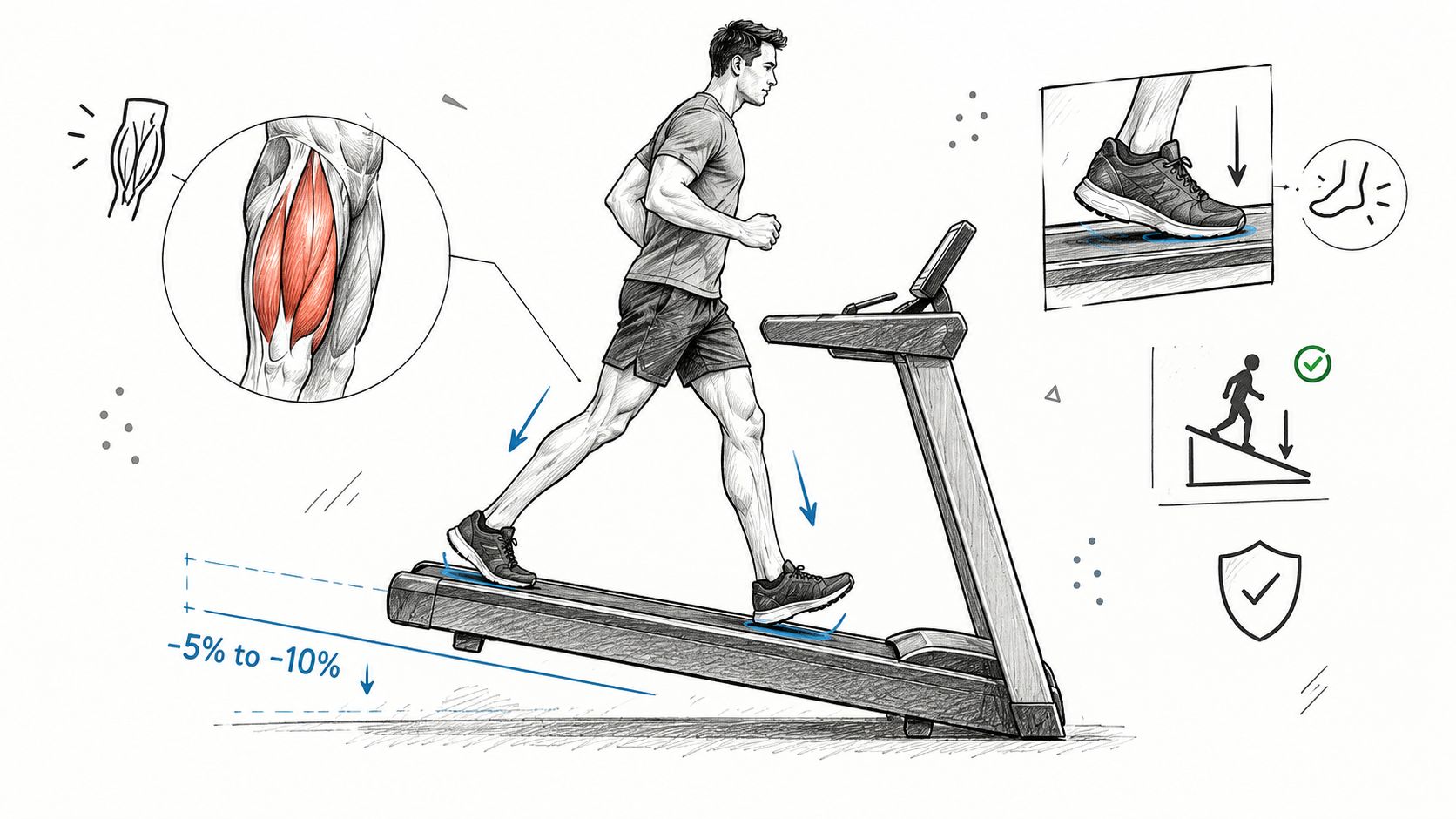
Decline work changes the muscle demand by emphasizing the controlled lowering phase of each step. It can challenge the thighs and lower legs in a way that flat walking doesn't, but it also creates soreness more easily than many people expect. For that reason, decline training belongs later in a progression, not at the beginning of a weight-loss plan.
Start with a brief warm-up on a flat or gently inclined belt. Then use a small negative grade for 15 to 20 minutes at a moderate pace. Keep the speed conservative and focus on controlled foot placement. Don't chase a faster pace because the belt is moving downhill. Finish with easy flat walking.
A cautious first session might look like this:
Warm-up: Easy flat walking.
Main set: A mild decline at a comfortable walking pace.
Technique: Keep your torso controlled and avoid reaching far ahead with each foot.
Frequency: Use decline work sparingly while your legs adapt.
The trade-off is clear. Decline training can add variety and lower-body demand, but it may interfere with your next workout if the soreness is excessive. If stairs feel unusually difficult afterward, reduce the decline or shorten the session. Sharp pain, instability, or persistent discomfort isn't a normal progression signal.
Use this session once your regular walking, incline walking, or running feels established. It's a supplement to your plan, not a superior replacement for the steady work that builds weekly volume.
6. Progressive Running Intervals Tempo Work
Tempo work sits between comfortable aerobic training and all-out intervals. You sustain a “comfortably hard” effort long enough to practice holding pace under fatigue, but you avoid the repeated maximal bursts used in HIIT. This makes tempo training appropriate for runners who have already built basic endurance.
Begin with an easy warm-up lasting several minutes. Then run for 15 to 20 minutes at a controlled hard pace, followed by an easy cool-down. You should be able to speak only in short phrases, but you shouldn't feel as if you're sprinting. If you can't maintain the effort evenly, split the main set into two blocks with an easy walk or jog between them.
Tempo work is demanding enough that one session per week is often sufficient at first. Add a second only when your easy sessions remain comfortable and your legs recover well. Pair tempo work with low-impact walking, steady cardio, and strength training rather than stacking hard running days.
The right tempo pace feels demanding from the beginning and sustainable to the end. If you surge early, you'll turn a threshold session into an interval workout by accident.
Track more than treadmill speed. Record how the effort felt, whether your posture stayed stable, and how quickly normal breathing returned after the cool-down. Progress might mean holding the same pace with less strain, extending the tempo block, or completing the session without needing an unscheduled recovery break. Those changes matter even when body weight moves slowly.
7. Reverse Incline Backwards Running
Backward treadmill work is an advanced coordination drill, not a shortcut to faster fat loss. It changes the demands on your hips, calves, hamstrings, and core, but the unfamiliar movement also increases the importance of balance and belt control. Begin with backward walking, not running.
Start with the belt stopped and position yourself carefully. Once you're ready, use a slow backward walk at a flat grade for a few minutes. Hold the rails only for balance if needed, and don't pull yourself along. When the movement feels controlled, add a small incline for a short finisher after normal walking.
A practical beginner session is:
Opening: Complete your usual easy treadmill work.
Finisher: Walk backward slowly for five to ten minutes.
Progression: Increase control and time before adding speed or incline.
Frequency: Use it no more than occasionally while soreness and coordination improve.
Place the treadmill where you can monitor your position safely. Stop immediately if you feel unstable, dizzy, or unable to control the belt. Backward running should be reserved for people with strong treadmill familiarity and a clear reason to use it.
The value here is variety and movement skill. It may help break the mental monotony of forward walking, but it shouldn't displace steady cardio, incline walking, or strength work.
8. Long, Slow Distance Training
Long, slow distance training builds tolerance for extended movement at an easy pace. It's useful for people who prefer longer weekend sessions, enjoy podcasts or audiobooks, or want to increase weekly calorie accumulation without repeatedly stressing high-speed mechanics.
Start with 45 minutes at a conversational walking or running pace. You should be able to speak comfortably throughout the session. If breathing becomes strained, slow down. The session's purpose is duration, not proving how fast you can finish.
A practical progression keeps the effort steady while gradually extending time. Add minutes only when the current duration feels routine and your recovery remains normal. One long session per week is enough for those beginning this approach. More experienced trainees may use another extended easy session, but they still need lighter days and at least some variety.
Long sessions can also expose fueling and hydration problems. Bring water, plan the timing around your schedule, and avoid treating the workout as permission to disregard overall nutrition. The treadmill can contribute to an energy deficit, but food intake and recovery still shape the result.
Keep the pace conversational. If the session feels like a race, it's no longer serving its main purpose.
This workout fits well into a broader weight-loss plan at the gym. Use entertainment to reduce monotony, but stay aware of your posture and foot placement rather than becoming completely distracted by a screen.
9. Ladder Intervals
Ladder intervals give you a built-in progression within one workout. The work periods grow longer, then shrink again, which creates changing demands without requiring you to improvise. They're a good choice for intermediate trainees who want more structure than Fartlek training but less maximal effort than repeated sprints.
Warm up easily, then use a 1-2-3-2-1 minute ladder. Match every work interval with an equal or slightly longer recovery period. The work pace should be challenging but repeatable. You shouldn't need to slow dramatically halfway through the ladder because the opening interval was too fast.
The session
Warm-up: Walk or jog until your breathing is easy.
Ladder: One minute hard, recover. Two minutes hard, recover. Three minutes hard, recover. Repeat the two-minute and one-minute efforts.
Cool-down: Walk easily until your breathing settles.
Progression: Add a little work only after the current ladder feels controlled.
The longer middle interval is the key test. Keep the pace even rather than treating it as a sprint. If you're new to intervals, use a strong walk or light jog for the work periods. Experienced runners can increase speed, but the workout still works when incline provides the challenge.
Schedule ladder intervals away from tempo work and other demanding leg sessions. They're most useful when they add variety without compromising the rest of your week. Write down the ladder pattern and how it felt so you can compare future sessions without relying on memory.
10. Alternating Incline and Decline Intervals
Alternating uphill and downhill work is one of the most demanding options on this list. It combines the muscular challenge of climbing with the controlled lowering demands of descending, so it should be introduced only after you're comfortable with ordinary incline walking or running.
Begin with a thorough warm-up on a flat belt. Then alternate three minutes at a moderate incline with three minutes at a mild decline, keeping the pace controlled in both directions. Add an easy flat-walking break if your form deteriorates. The goal is deliberate movement, not forcing the highest available grade.
A conservative session might use:
Uphill block: A manageable incline that raises effort without leaning on the rails.
Downhill block: A mild decline at a slower pace.
Recovery: Easy flat walking between sets when needed.
Finish: Several minutes of relaxed cool-down.
Don't schedule this workout next to heavy lower-body strength training while you're adapting. It may leave your legs more fatigued than a standard interval session, especially if you're unfamiliar with decline work. Reduce either the incline or decline first if soreness lasts longer than your normal recovery.
Use this format occasionally as an advanced variation. It can make a treadmill session engaging, but it isn't necessary for weight loss. The weekly work you can recover from still matters more than novelty.
Top 10 Treadmill Workouts: Weight-Loss Comparison
Method | Implementation Complexity 🔄 | Resource & Recovery ⚡ | Expected Outcomes ⭐📊 | Ideal Use Cases 💡 | Key Advantages ⭐ |
|---|---|---|---|---|---|
High-Intensity Interval Training (HIIT) | High 🔄, structured intervals, technical form | Moderate ⚡, minimal equipment, high recovery and joint load | Very high ⭐📊, maximal calorie burn per minute; strong EPOC | Time‑pressed individuals seeking fast results | Time‑efficient calorie burn; rapid cardio gains |
Steady-State Cardio (Moderate Intensity) | Low 🔄, steady pace, easy to teach | Low ⚡, longer sessions, low recovery demand | Moderate ⭐📊, steady fat oxidation; builds aerobic base | Beginners and those prioritizing consistency | Sustainable, low injury risk; easy adherence |
Incline Walking (Low‑Impact) | Low 🔄, simple setup, posture attention | Low‑Moderate ⚡, longer duration, low joint stress | Moderate‑High ⭐📊, higher burn than flat walking; glute focus | Joint‑sensitive or heavier starters | Low impact, scalable calorie burn; muscle engagement |
Fartlek Training (Speed Play) | Moderate 🔄, unstructured pacing; self‑regulated | Moderate ⚡, flexible time, moderate recovery | Moderate‑High ⭐📊, improves running economy; varied calorie burn | Runners seeking variety and motivation | Enjoyable, adaptable; builds speed + endurance |
Decline Treadmill Running/Walking | Moderate‑High 🔄, requires controlled technique | High ⚡, significant eccentric stress; soreness | High ⭐📊, increased calorie burn; quad strengthening | Intermediate/advanced trainees breaking plateaus | Unique eccentric stimulus; boosts lower‑body strength |
Progressive Running Intervals (Tempo Work) | High 🔄, pace control at lactate threshold | High ⚡, needs warm‑up/cool‑down and recovery | High ⭐📊, improves aerobic capacity and fat oxidation | Serious runners and dedicated weight‑loss seekers | Sustained metabolic demand; improves speed/endurance |
Reverse Incline (Backwards Running) | High 🔄, balance/coordination and safety needs | Moderate‑High ⚡, learning curve; muscle soreness | Moderate‑High ⭐📊, unique muscle activation; core engagement | Variety seekers and those avoiding knee stress | Targets neglected muscles; reduces knee load |
Long, Slow Distance (LSD) | Low 🔄, simple pacing, low technical demand | High ⚡, large time commitment; low session intensity | Moderate‑High ⭐📊, high total calorie burn; fat adaptation | Endurance‑minded or time‑available individuals | Builds endurance and fat‑utilization; low injury risk |
Ladder Intervals | High 🔄, structured ascending/descending format | High ⚡, requires tracking; significant recovery | High ⭐📊, progressive metabolic stimulus; strong burn | Intermediate trainees wanting structured progression | Clear progression; combines HIIT benefits with volume |
Alternating Incline & Decline Intervals | Very High 🔄, complex programming and control | Very High ⚡, very taxing; substantial recovery needed | Very high ⭐📊, broad muscle engagement; plateau‑breaking | Advanced trainees combining strength and fat loss | Maximizes muscle recruitment and calorie expenditure |
Build a Week You Can Recover From
The best plan starts with the least demanding sessions that you can repeat. Beginners can build consistency with steady-state cardio and incline walking, using duration and comfortable frequency as the first targets. Once those sessions feel routine, Fartlek training, ladder intervals, or a carefully controlled tempo session can add variety without making every workout punishing.
Advanced trainees can use decline work and alternating incline-decline intervals, but these sessions should remain occasional. HIIT also belongs in a balanced schedule, not as the default answer to every weight-loss question. The evidence supports a broader view, moderate-to-vigorous aerobic exercise becomes increasingly useful as weekly volume approaches 300 minutes, while HIIT and moderate continuous training can produce comparable weight-loss outcomes in some adults when adherence is similar, according to the evidence summarized in JAMA Network Open.
Choose one starting pattern:
Beginner: Two or three steady or incline sessions, with easy recovery between them.
Intermediate: Two steady sessions, one incline session, and one Fartlek, ladder, or tempo workout.
Advanced: Two easy sessions, one quality interval session, one longer aerobic session, and occasional advanced incline variations.
Increase only one variable at a time. You might extend duration, add a session, increase speed, or raise the incline, but changing all four together makes it difficult to identify what your body can tolerate. Track perceived exertion, recovery, and performance. If the same pace suddenly feels much harder for several workouts, reduce the demand rather than forcing progression.
Empire Athletics' 24/7 access can make that scheduling easier for members across Leominster, Lunenburg, and Webster. Its cardio and strength equipment supports different training demands, while certified one-on-one personal training can help match a treadmill session to your starting point, goals, and recovery capacity. The on-site Empire Cafe offers coffee, smoothies, and protein shakes around workouts, which can add convenience without turning nutrition into an afterthought.
Weight loss still depends on the overall pattern. Treadmill sessions create useful activity, strength training supports muscle retention, and nutrition determines whether your weekly energy balance moves in the intended direction. Build a week you can repeat, then let gradual progression do the work.
Visit Empire Athletics to explore 24/7 gym access, modern cardio equipment, and certified one-on-one training at Central Massachusetts locations. Choose a treadmill routine that fits your schedule, then use the gym's strength equipment and Empire Cafe options to support the full weight-loss plan.