What to Eat After Lifting Weights: A Practical Guide
Wondering what to eat after lifting weights? Get practical timing, macros, sample meals, and meal prep tips to maximize recovery and muscle growth.

You finish a hard session, your shirt is damp, your grip feels cooked, and the only thing louder than your breathing is your stomach. At that moment, what to eat after lifting weights stops being a theory question and turns into a real one. The answer depends on whether you're heading to a normal dinner, squeezing in a second session, or training before breakfast and trying to get to work on time.
Why Post-Lift Nutrition Matters More Than You Think
A lifter finishing a session after work has a practical problem, not a nutrition exam. The choice is usually between a proper meal, a rushed snack, or whatever is available before the commute. Post-lift nutrition should replace what training used, while fitting the time, equipment, and appetite you have.
Resistance training increases the need for muscle repair, hard sets use stored carbohydrate, and sweating reduces fluid and electrolyte stores. The 2017 International Society of Sports Nutrition position stand explains that resistance exercise and protein intake work together to support muscle protein synthesis. It points to 0.25 g of high-quality protein per kg of body weight per serving, or about 20 to 40 g per meal. The anabolic effect of exercise lasts at least 24 hours, and protein servings can include roughly 700 to 3000 mg of leucine, spaced every 3 to 4 hours across the day (ISSN position stand).
Practical rule: If the workout leaves you flat, choose a recovery meal that rebuilds rather than merely quieting hunger.
The session determines how aggressive that meal needs to be. A once-a-day lifter with several hours before dinner can use a normal balanced meal. Someone training twice in one day has less time to restore fuel before the next session. A fasted early-morning lifter should make the first meal more deliberate, since training began before any food was available.
The food setup matters too. With only a shaker and a gym café, a shift worker may need a protein drink plus a carbohydrate source that can be eaten immediately. With a full kitchen, a plate of lean protein, rice, potatoes, or another familiar carbohydrate is easier to build. Neither choice is automatically superior. The useful option is the one that can be prepared, purchased, and eaten consistently.
Under-fueling often appears before lifters identify the cause. Strength plateaus, lingering soreness, and lighter sleep can all accompany a day that never adequately replaces the session's demands. A single workout rarely requires panic about a narrow feeding window, but repeated missed meals can leave recovery behind.
What the body is trying to replace
Post-lift nutrition covers muscle repair, fuel restoration, and rehydration. Recent coaching guidance places nutrient timing after total daily intake and protein distribution, which carry most of the practical workload (NASM). Match the meal to the training context, whether that means a full dinner, a fast shake between shifts, or a larger refueling meal before another session.
The Three Macros You Need After Training
A normal once-a-day lifting session and a second workout before bed do not create the same nutrition problem. Protein supports repair in both cases, while carbohydrate needs rise when the session is long, high-volume, fasted, or followed by another demanding effort. Fat still belongs in the diet, but it is rarely the priority in the first recovery meal.
Protein is the anchor. A practical serving is 20 to 40 g of high-quality protein, with intake repeated every 3 to 4 hours across the day rather than crammed into one meal. The ISSN guidance uses 0.25 g/kg per serving, which fits that range for many lifters (ISSN position stand). A shift worker leaving the gym can meet the target with a shake and yogurt from the in-gym café. Someone heading home can use eggs, chicken, fish, tofu, or another familiar protein.
Carbohydrates deserve more attention when glycogen restoration must happen quickly. Guidance for rapid recovery supports 1.0 to 1.2 g of carbohydrate per kg of body weight per hour, particularly during the first 4 to 6 hours after exercise (post-workout carbohydrate guidance). For a 75 kg athlete, that equals about 75 to 90 g per hour during that recovery window. A single-session lifter who will not train again soon usually has no reason to force that amount. Rice, potatoes, oats, fruit, bread, and sports drinks can all fill the role.
Fat has a place, but keep the immediate recovery meal centered on protein and carbohydrates when replenishment is the goal. A moderate serving works well in a normal dinner. If digestion needs to stay quick before another session, use less fat and choose simpler foods.
Training Context | Protein (g/kg) | Carbs (g/kg) | Fat (g) |
|---|---|---|---|
Once-a-day standard session | 0.3 to 0.4 | 0.5 to 0.7 | Moderate |
Fasted morning lift | 0.3 to 0.4 | 0.7 to 1.0 | Moderate |
Double session or high-volume day | 0.4 to 0.5 | 1.0 to 1.2 | Lower to moderate |
The meals surrounding training also shape the result. Evidence-based guidance commonly uses 0.4 to 0.5 g/kg lean body mass in the meals around exercise, with pre- and post-workout meals roughly 3 to 4 hours apart (PMC review). Use those figures to set direction, not to turn every meal into a weighing exercise.
The fast rule I use with lifters
Normal session, build a normal meal. Draining session, add carbohydrates. Another workout soon, front-load carbohydrates and keep the food easy to digest.
Timing Your Meals Around Your Workout
A lifter finishes a fasted morning session before work, then has no kitchen access until midday. Another trains after dinner and will not lift again until tomorrow. Both completed a workout, but their post-lift timing should differ. The old “eat within 30 minutes or you wasted the workout” rule is too rigid. Coaching guidance now treats the post-workout window as wider when daily protein is already consistent and another session is not approaching soon (NASM).
Timing matters more when the schedule is compressed. Fasted training leaves no pre-lift meal in place, so eating sooner helps restore energy and provides protein. Back-to-back sessions place greater demand on carbohydrate replacement. A long, high-volume leg workout also creates more reason to prioritize the next meal than a brief equipment-only session.
Eat sooner when the next session is close. Eat on schedule when the rest of the day is normal.
A simple timing tier
Tier 1, eat within 60 to 90 minutes. Choose this after fasted training, a demanding session, or a workout followed by another session later that day. Use a complete meal when a kitchen is available. A shake, prepared bowl, or in-gym cafe option works when a shift starts immediately.
Tier 2, eat within 2 to 3 hours. This suits a typical once-a-day lifter. If you ate before training and will not return to the gym soon, a normal meal later can cover recovery without forcing food immediately after the final set.
Tier 3, timing is low priority. If you already eat 3 to 4 protein-anchored meals across the day, focus on meeting that pattern rather than watching the clock after every lift. Meal consistency matters more than a strict deadline (ISSN position stand).
Busy members often create unnecessary pressure around the so-called anabolic window. I have seen lifters rush through meals, sacrifice sleep, or skip food entirely when the perfect option was unavailable. Match the timing to training demands, the next session, and what you can realistically carry or buy.
Sample Meals and Shakes You Can Use Today
A useful post-lift meal starts with a protein anchor, then adjusts carbohydrates to match the session. Aim for 20 to 40 g of high-quality protein from whey, Greek yogurt, cottage cheese, chicken, turkey, fish, or eggs. That range fits the acute muscle-protein response described in the ISSN position stand. Add rice, oats, bananas, berries, or potatoes when the workout was long, demanding, or followed by another session.
The meal should be repeatable, not elaborate.
A shake can cover recovery when it includes enough to function as a meal. After hard lifting, protein alone often leaves the day's energy needs unmet. Blend protein with fruit, oats, or milk so the drink supplies carbohydrates as well as protein, consistent with the JISSN recovery guidance.
The best choice also depends on your setup. A lifter heading to work, travelling light, or training during a shift may need an in-gym purchase rather than a packed container. The Empire Athletics cafe offers one practical grab-and-go option for members who cannot cook between training and work.
Meal | Protein (g) | Carbs (g) | Fat (g) | Prep Time | Best For |
|---|---|---|---|---|---|
Whey shake with milk, banana, oats | 30 | Moderate to high | Low to moderate | 5 minutes | Fasted mornings, busy schedules |
Chicken and rice bowl with vegetables | 35 to 45 | High | Moderate | 15 minutes | Heavy lower-body days |
Greek yogurt, berries, granola, eggs | 25 to 35 | Moderate | Moderate | 10 minutes | Midday training, desk lunch |
Slow-cooker chicken, rice, roasted vegetables | 40+ | High | Moderate | Batch-prepped | Weekend prep, family meals |
Match the meal to the equipment available. With a full kitchen, cook bowls and plated meals. With only a fridge and basic equipment, keep shakes, yogurt tubs, rotisserie chicken, and pre-portioned carbohydrate sources ready. A single-session lifter may need only a normal meal later, while a fasted or double-session lifter benefits from the faster option immediately after training. Recovery works best when the food fits the day you have.
Real-World Scenarios for Busy and Shift Lifters
Maya finishes a 5 a.m. session after a night shift, wraps her last set, and walks straight to the locker room. She doesn't have time to cook, so she grabs a pre-made shake from the gym cafe, and that gives her roughly 35 g of protein and 60 g of carbs before she even leaves the building. It's not a perfect chef-prepped meal, but it beats going home empty and crashing later.

The parent training at 6 p.m. usually needs a different compromise. They come home to homework, dishes, and a fridge that has to work fast. A Greek yogurt bowl with granola and berries, or leftover chicken and rice eaten while helping with schoolwork, is often the right trade-off because it's realistic enough to repeat.
The remote worker has the easiest schedule but often the worst habits. Lunch training can turn into “I'll eat later” because the desk is right there. A full meal 30 minutes after the session usually solves that problem better than waiting for the perfect dinner.
A busy lifter doesn't need the most polished menu, they need the meal they'll finish. If the choice is between a less elegant shake and no recovery nutrition at all, the shake wins every time. That's also where personal training support can help, because food and training plans work better when they match the same schedule.
Matching Your Intake to Your Training Load
A single 45 to 60 minute lift usually does not require an elaborate recovery plan. For most standard sessions, 25 to 40 g of protein and one moderate serving of carbohydrates will cover the basics, particularly if you ate earlier. That approach supports recovery without making every gym visit a meal-planning project.
Training context changes the target. A long, demanding session, a hard lower-body workout, or two sessions in one day creates a larger recovery bill. In those cases, aim for 40 to 50 g of protein across two feedings and 1 to 1.5 g/kg of carbs across the same recovery period, especially if the next workout is soon. For more on how rep ranges affect muscle growth, see our guide to the best rep range for muscle growth.

The decision rule that keeps it simple
Light or standard session: Have a normal meal built around protein and one carbohydrate source.
Heavy or glycogen-costly session: Add another carbohydrate feeding later that day.
Short recovery gap: Eat carbohydrates sooner to support the next session.
Cutting phase or low frequency: Keep protein high while measuring carbohydrates more carefully.
Session over 90 minutes: Plan a complete recovery meal rather than relying on a snack.
A shift worker may finish lifting with only an in-gym cafe available. A protein-rich meal with rice, fruit, or yogurt is more useful than waiting hours for a full kitchen. Someone training fasted may need a larger first meal, while a fed lifter can use a smaller snack and eat normally later.
The practical rule is simple: match intake to session demand and the time until you train again. A solid meal within a reasonable window beats a perfect plan that never gets eaten.
Meal Prep Tips That Make Recovery Automatic
Friction kills recovery more often than ignorance does. Most lifters know they should eat after training, but they get home, open the fridge, and face too many small decisions. The fix is to treat post-workout nutrition like training prep, with food already set up before the session starts.
A good cadence is simple. Cook for about 90 minutes on Sunday, and use that block to produce six 40 to 50 g protein meals that can carry you through the first half of the week. On Wednesday, do a shorter refresh, restock produce, and cook 2 to 3 more portions so the food stays usable and the plan stays alive.
If you have a full kitchen, the easiest base is chicken thighs, rice, and roasted vegetables. If you only have equipment and a fridge, lean on shaker bottles, Greek yogurt tubs, protein powder, frozen berries, and rotisserie chicken from a nearby store. The gear changes, but the principle doesn't.
Automation beats motivation: If the meal is already portioned, you don't have to negotiate with yourself after training.
Three small habits make the biggest difference. Pre-portion oats into mason jars. Freeze smoothie bags with measured fruit and spinach. Keep a backup protein source in your gym bag so a missed meal doesn't turn into a missed day of recovery.
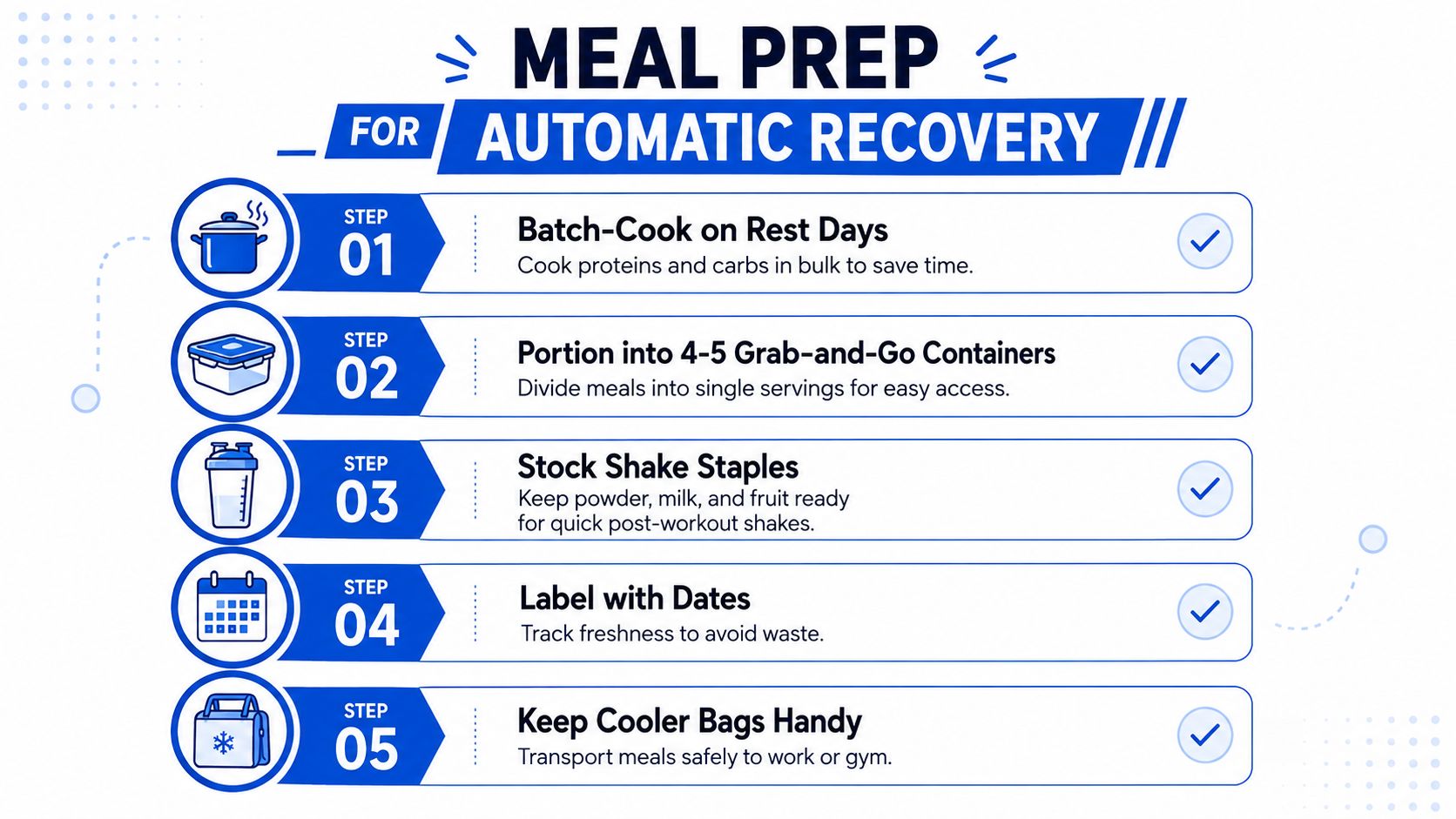
The cafe is the safety net, not the crutch. Some days the batch prep runs out, the shift changes, or the family schedule wins. On those days, a prepared shake or simple bowl keeps the habit intact and protects the next workout.
If you want recovery nutrition to feel easier instead of harder, train in a place that fits real life. Empire Athletics pairs 24/7 access with certified one-on-one training and an on-site cafe, so you can leave the gym with a plan for the next meal, not just a finished workout. Visit Empire Athletics and make your post-lift routine as consistent as your training.